
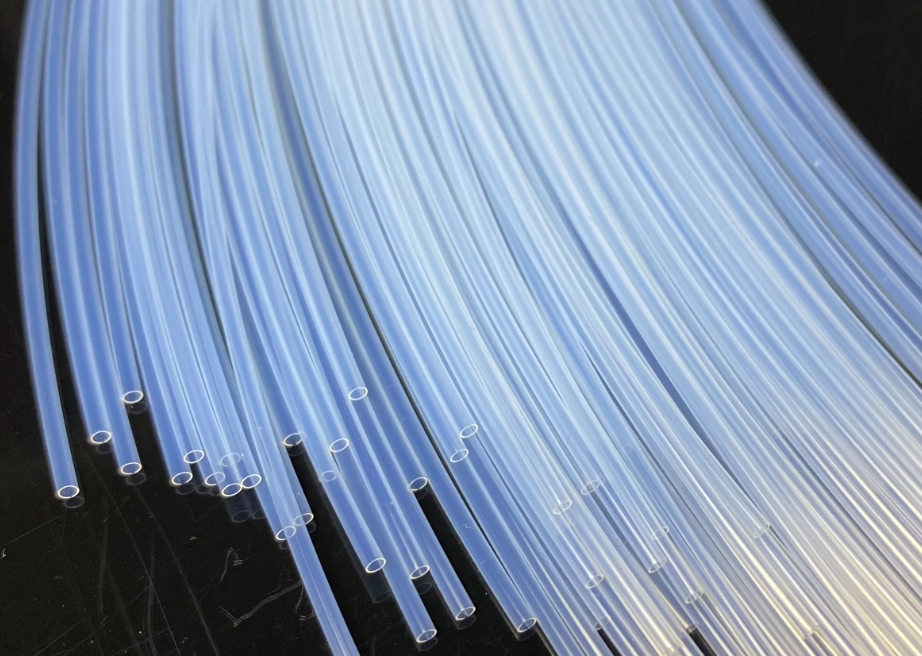
This product features five core properties: biocompatibility, ultra-low friction, sterilization resistance, antithrombotic performance and corrosion resistance. It is widely applied in four major fields: interventional therapy, implantation, diagnosis & treatment, and fluid delivery.
I. Core Properties (Essential for Medical Applications)
Biocompatibility: Chemically inert, non-toxic and non-allergenic. Compliant with ISO 10993 and USP Class VI standards, it rarely causes rejection after long-term implantation.
Ultra-low friction (μ≈0.05): The ultra-smooth inner wall reduces thrombosis and tissue damage, and improves the deliverability of medical devices.
Extreme temperature resistance: Maintains stable performance from -200℃ to 260℃, and withstands sterilization by high-pressure steam, ethylene oxide and gamma rays.
Chemical inertness: Resists acids, alkalis, organic solvents and pharmaceuticals. It avoids protein adsorption and liquid medication contamination.
Anti-aging & anti-kink performance: Flexible and tough. It resists collapse when bent inside the human body and ensures reliable long-term service.
II. Major Medical Applications
1. Interventional Catheters (Most Widely Used)
Vascular intervention: Lining for guiding catheters (ultra-thin 12μm), coating for balloon catheters (to reduce vascular injury), microcatheters (neurological/coronary), and angiographic catheters.
Venous access & infusion: Indwelling needles, PICC lines, infusion and blood transfusion tubing, pressure monitoring tubes.
Urology: Ureteral stents, nephrostomy tubes, bladder drainage tubes, and linings/coatings for urinary catheters.
Respiratory & digestive systems: Working channels for bronchoscopes, nasal oxygen tubes, and biopsy channels for gastroscopes and colonoscopes.
Dialysis: Hemodialysis tubing, arteriovenous fistula tubes, and hollow fiber membranes for dialyzers (low protein adsorption).
2. Long-term Implantable Devices
Artificial blood vessels (ePTFE): Expanded PTFE with a microporous structure, applied to coronary artery bypass grafting, abdominal aortic aneurysm repair and lower extremity vascular reconstruction, with a 5-year patency rate of approximately 94%.
Cardiovascular devices: Suture rings for heart valves, insulation layers for pacing leads, and antithrombotic coatings for vascular stents.
Repair & plastic surgery: Hernia repair meshes, soft tissue fillers and maxillofacial restoration materials.
Orthopedics: Lubricating liners for joints and surgical sutures (high tensile strength with low inflammatory reaction).
3. Precision Diagnosis, Treatment & Medical Devices
Endoscopes: Inner tubes and working channels (for smooth passage of biopsy forceps).
Minimally invasive devices: Sheaths, dilators, protective sleeves for puncture needles, and heat-shrinkable tubes (for insulation and reinforcement).
Sensors & leads: Protective sleeves for temperature/pressure sensors, insulation layers for electrophysiological catheters, and sheaths for radiofrequency ablation catheters.
4. Drug & Fluid Delivery
High-value pharmaceutical delivery: Tubing for chemotherapeutic drugs, insulin and biological agents (no adsorption or chemical reaction with medicines).
Laboratory & in vitro use: Tubing for analytical instruments, sample transfer tubes and pipeline components for cell culture systems.
III. Key Advantages vs. Other Materials
Compared with silicone: Better anti-aging performance, lower friction, superior sterilization resistance and less protein adsorption. Ideal for long-term implantation and high-specification catheters.
Compared with nylon/polyurethane: Higher chemical stability, better antithrombotic property and greater heat resistance. Suitable for drug delivery and interventional devices.